A Daughter, a Corridor, and a Question We Should All Know the Answer To
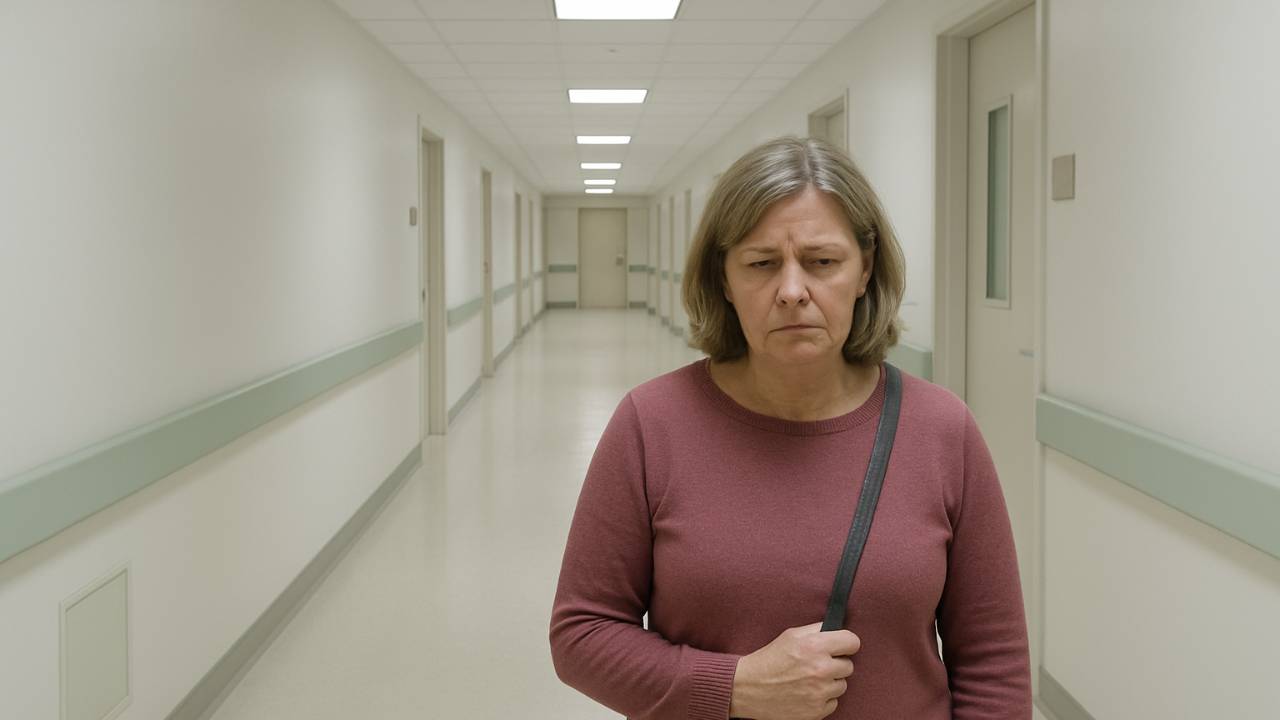
I walk into the hospital room after receiving handover for my 85-year-old patient who is dying of prostate cancer. The lights are dim, Elvis (his favorite, I’m told) is playing softly, and the patient—who likes to be called Mack—looks comfortable and relaxed in his unconscious state, with pillows supporting him in all the right places and fresh lip balm on. It’s beautiful—just what we all hope for at the end of our lives.
His daughter, Linda, sits by his bed looking frightened, stunned, restless. I sit down beside her and introduce myself, mindful that I still need to finish handover for my other patients, but sensing that I need to build rapport with her. I can see she’s been there all night. I guess she hasn’t slept. I can almost feel her mind whirling with all the things she hasn’t done at home, at work, for the rest of the family.
“Have you had any breakfast?” I ask. I can tell by the look on her face that even this simple act of looking after herself feels like just another job on her list.
As I care for Mack throughout my shift, I chat with Linda. She is distracted and agitated, but I learn she’s in her 50s, has two adult children living at home while she supports them through university, and she works in administration. Mack is very settled, even as I turn him. He is following a predictable pattern of normal dying. His breathing is irregular and changing often, his colour has shifted too. It won’t be long now.
As I continue with my other patients, Linda stops me in the corridor. She is panicking.
“Can you tell me what’s happening in there? I want to know what’s going on,” she demands.
I’m not surprised—this happens often—but I am saddened. I wish she were able to just be with her dad and see the comfort and beauty in his final moments. But how can she? She hasn’t even recognised that he is dying. There’s a good chance she has never been exposed to death, never talked about it, always been sheltered from it. It almost feels too late to prepare her for what is already happening.
We’re leaning against the handrail in a public corridor. I glance around for a vacant meeting room where we could sit quietly—no luck. A call bell lights up for one of my other patients. I catch the eye of another nurse; she’ll miss her lunch break, but I know she’s got my back.
Linda and I walk to a quieter part of the corridor—slightly better—but still not the place for a conversation like this. I wish I could go back three years and learn more about the family and their values and discuss how to prepare for the final years of life. I wish I could go back three months and sit at the kitchen table with Mack and Linda to talk about what they wanted, explain what was coming, put a plan in place. Maybe three weeks ago there were signs Mack was nearing the end, signs that could have given Linda time to manage her work and life around this. Even three days ago, I could have reassured Mack and explained to Linda what changes to expect.
But there was no opportunity. And we don’t talk about it. How do I say all that now?
“How have things been going?” I start.
“He has been going downhill for a while. Is he dying?” Linda asks.
Again, I’m saddened that she doesn’t already know the answer. How can we, as a society, be so out of touch with such a universal, normal process? How is it such a taboo that we can’t even recognise dying when it is expected and right in front of us?
I can’t blame Linda. She is not alone. I feel sad that she is standing in a hospital corridor learning what she should have known her whole adult life: what happens when a person dies. She should be in the room with her dad, listening to Elvis, holding his hand, maybe toasting him with a favourite drink. But how can she learn something nobody talks about? Why don’t we share our experiences around death the way we do with childbirth, adolescences, menopause, or other life transitions? We know these things, but we don’t talk about them. We don’t prepare each other. We don’t ease the burden. We stay silent.
Now, where do I start?
“Yes, I think he is,” is all I can say. I want to tell her so much more, to ease the fear, to prepare her—but it isn’t the time.
Linda hurries off to call her brother, Brad. She returns to the room, eyes full of tears, just as Mack is taking his last breaths. Brad arrives too late. I offer condolences, tea, a box of tissues, and space and time to sit with Mack. They hurry out of the hospital instead. They don’t sit with their dad because they don’t know how to be with death, have never touched a body.
I watch them go and worry about how they will grieve. I hope they share their story and talk about Mack and his death. I think of the gentle, expected, calm final moments of Mack’s life and wounder how they will be remembered. Of course, there is often sadness when someone dies but there doesn’t have to be shock and fear – not if we share, learn and prepare together.
End of Life Ed Courses
Learn how to care for a loved one with a terminal illness