Talking About Death When Nobody Is Dying
I spend a lot of time talking about death, dying, and everything that comes with it.
Most of those conversations are with people who work in the field — end-of-life doulas, nurses, aged care workers, funeral directors and others who see death regularly. We share similar experiences. We understand what the final stages of life can look like. But we’re usually talking about the deaths of other people. It isn’t too close to home.
The other type of conversation I have is with people who are very close to death. People who are exhausted, fading, trying to understand what is happening in the final days or hours of their life. Sometimes it’s already too late. The person has slipped into the last stage of life and I can’t talk to them anymore. Instead, I talk to their family at the bedside, explaining what is happening and what they might see next.
What I rarely do is talk to people who are well.
If I did try to describe dying to someone who feels healthy and busy and nowhere near the end of life, would they really hear it? Probably not. They would hear it as something that happens to other people — not something they could prepare for, not something that belongs in their life right now.
Death is one of the few certainties we have. We all know that, yet somehow we still treat it like something unexpected.
We do actually have the chance to prepare for it. We have the chance to talk about it before it becomes urgent, before it becomes emotional and overwhelming, before we are sitting in a hospital room trying to make decisions in the middle of fear and grief.
And yet, like the painter whose own house needs painting, I hadn’t had this conversation with my own parents.
I decided about a year ago that we should talk about it. It felt logical. They are both well. Our family situation is simple and straightforward. I do this for a living — it should have been easy.
It wasn’t difficult exactly. Mum and Dad were both open to it. But it was harder than I expected.
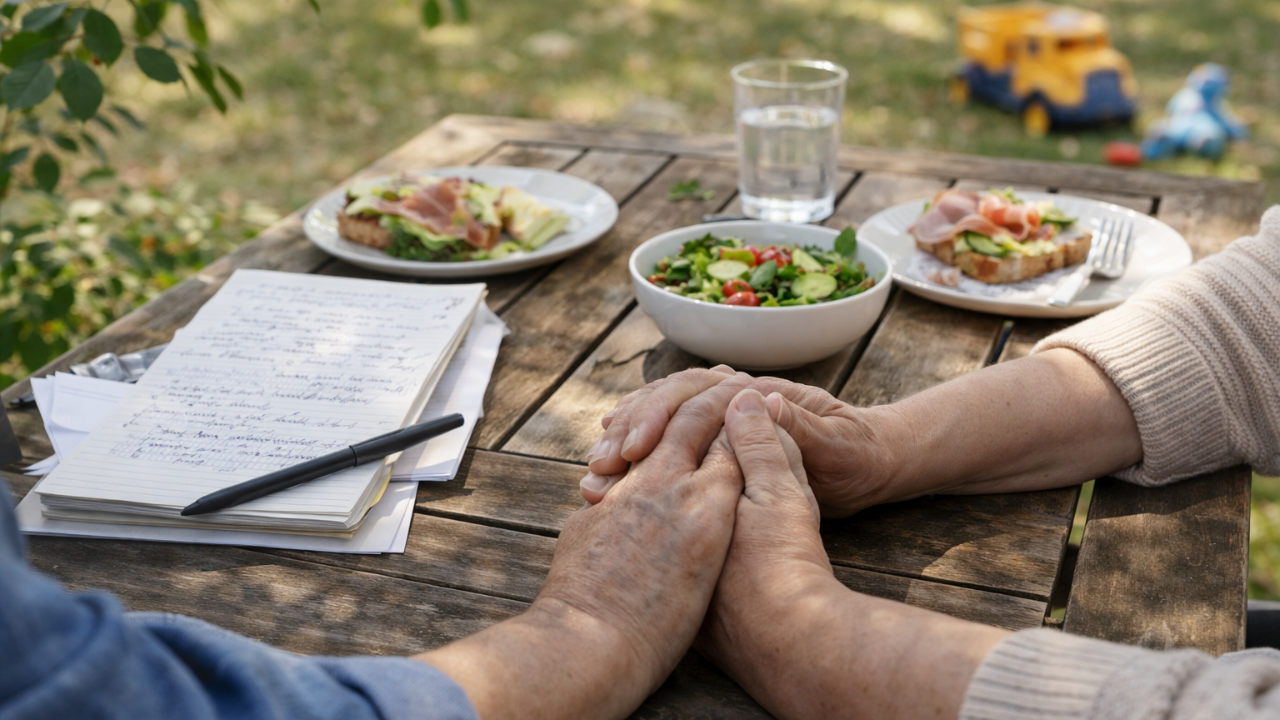
Mum made lunch. My son played happily nearby while we sat outside in the sun. We had planned the conversation ahead of time so they had space to think about what they wanted to say. It was such a different setting to the conversations I usually have — not rushed, not emotional, not happening in a hospital corridor or at the bedside of someone who is dying.
It was calm. Tender. And actually, quite enjoyable.
We talked about how they feel about things. What matters to them. What they would want if something unexpected happened. We made some practical decisions too. We worked through a lot of things on my list.
What struck me afterwards was how much easier it felt simply knowing. Knowing what matters to them. There were some things they didn’t know the answers to and that was helpful too because I know if my sisters and I are left to make a choice without them, we won’t be going against their wishes because they don’t have any wishes!
These conversations aren’t really about death. They’re about care. They’re about making sure the person you love is looked after in the way they would have wanted when they can no longer explain it themselves. They are what allow good care to happen. Care that feels calm instead of rushed. Care that feels personal instead of clinical. Care that respects the person and the family, not just the illness.
They are also what make a good death more possible. Not a perfect death — that doesn’t exist — but a death that feels gentler, more prepared, less chaotic, and more in line with what the person actually wanted.
And maybe most importantly, these conversations shape the way families grieve afterwards.
When people know they followed their loved one’s wishes, the grief still hurts — of course it does — but it often feels clearer, calmer, and less burdened by guilt or doubt. Families aren’t left wondering if they made the wrong decision. They aren’t replaying those final days asking themselves what they should have done differently.
If I found the conversation with my own parents easy to put off, I wonder how it feels for everyone else.
I think for many people it is simply avoided. Not because they don’t care, but because they care so much it feels too hard to bring up. Then one day something happens unexpectedly, and the conversation is forced in the middle of crisis — in an emergency department, in a hospital room, surrounded by fear and exhaustion, without a plan and without knowing what the person you love would have wanted.
And that’s the part that feels the hardest.
Not death itself, but the silence beforehand.
When we talk early, tenderly and imperfectly, we give ourselves something really important: the chance to care better, the chance for a calmer ending, and the chance to grieve without so many unanswered questions.
End of Life Ed Courses
Learn how to care for a loved one with a terminal illness